In this article
- What is deep relaxation and how does it support overall wellness?
- Why does the body need deep relaxation to maintain balance?
- What are the common signs that your body needs deeper relaxation?
- How does deep relaxation support physical health?
- What relaxation practices can support long-term wellness?
- How often should you make deep relaxation part of your routine?
- How can deep relaxation become part of a sustainable long-term wellness routine?
- Explore personalized relaxation experiences for your long-term wellness goals
- Frequently Asked Questions (FAQs)
One work notification, and there goes your peaceful evening!
You haven’t even opened the message, but you’re already thinking about what needs to get done tomorrow.
That sudden worry can trigger your stress response, leaving your shoulders tense even after you’ve stopped thinking about the message.
When those small stress reactions happen repeatedly, your body may not get enough time to fully relax between them. That’s why deep relaxation matters for long-term wellness.
The problem is, you might not even notice how much tension you’re carrying when you’ve grown used to it. Taking time to fully relax gives your body a chance to unwind instead of staying tense. Eternel Experiences’ heated sand massage is one way to slow down and ease some of that built-up tension.
What is deep relaxation and how does it support overall wellness?
Deep relaxation is a calm state in which your body moves away from its fight-or-flight response and toward rest-and-digest mode. Your heart rate can slow, your muscles can loosen, and you may feel less overwhelmed.
This calming shift is known as the relaxation response.
But having a night off doesn’t always mean you’ve reached it. You might spend the evening scrolling reels while your mind is still caught up in the day’s demands.
You finally have time for yourself, but no energy left to enjoy it.
UCSF Magazine explains one reason those quiet hours might not feel restful: your mind and body need to feel safe to enter deep rest. The article suggests calming sensory experiences, such as smelling essential oils, feeling sand beneath your feet, or looking toward the horizon.
Sand has also been used in traditional wellness practices, including hot sand bathing, known as psammotherapy. Eternel Experiences takes a different approach with its heated sand massage (in French: massage au sable chaud). You lie on a heated sand table with a soft towel between your body and the sand, while beach-scented aromatherapy and a calming soundtrack fill the room. The experience also includes gentle light therapy and panoramic views of Montreal.
When you finally settle, you may notice that your shoulders aren’t as tense. Your thoughts may quiet down, too, instead of circling tomorrow’s to-do list.
Feeling less wound up may even leave you with more patience for the people around you.
Why does the body need deep relaxation to maintain balance?
Your body is constantly adjusting to keep its internal conditions stable, a process known as homeostasis. Deep relaxation can help it settle after stress instead of staying on alert from one demand to the next. Without enough time to recover, tension, poor sleep, and fatigue can become harder to shake.
A tight deadline, tense client call, or late-night email can trigger that same fight-or-flight response. Your heart may beat faster, your muscles may tighten, and stress hormones such as cortisol help keep you alert. Digestion may also slow while your body responds to the pressure. That stress response is normal in short bursts. The problem comes when one stressful moment follows another, leaving little time to relax in between.
Work can strain your body as well as your mind, and for some people it continues into their personal time. According to Statistics Canada, 54.3% of Canadian workers reported frequent exposure to ergonomic risks, including repetitive movements and handling heavy loads. The same survey found that 17.0% did unpaid work during their free time several times a month. If you’ve ever answered a work message after hours without pay, you know what that can look like.
When work takes up that much of your day, even a quiet break can feel welcome. A heated sand massage won’t remove those pressures, but it can give you time away from them while the warmth helps tired muscles relax. Even so, one quiet hour isn’t a substitute for regular rest. Making room for deep relaxation throughout the week can help you unwind before the next demanding day begins.
What are the common signs that your body needs deeper relaxation?
Some of the most common signs that your body needs deeper relaxation include tight muscles, poor sleep, mental fatigue, irritability, and trouble unwinding after the day ends.
These signs can build slowly, so it’s easy to write them off as the result of one busy month (or two). You might notice them in everyday situations like these:
- Your neck, shoulders, or lower back stay tight and sore for days.
- You struggle to fall asleep, or you wake up tired after eight full hours in bed.
- Your focus fades by mid-afternoon, and simple tasks start to feel draining.
- Your mind keeps replaying the day long after you close the laptop, making it hard to settle down in the evening.
- You snap at small problems, and by evening you feel emotionally drained.
That drained feeling can carry over into your social life, too. You don’t want to cancel plans again.
But you can’t face going out either.
When even plans you want to keep feel exhausting, it may be worth giving yourself a quieter evening instead of pushing through another outing.
How does deep relaxation support physical health?
Deep relaxation supports physical health by easing muscle tension, helping your body recover after demanding days, and supporting better sleep. It can also help you notice where you carry stress and discomfort.
These benefits can show up in 5 practical ways:
- Muscles that stay tight after long desk hours may start to loosen as you relax.
- Taking a break between workouts gives your body time to recover before the next one.
- A calmer nervous system may make it easier to fall asleep and stay asleep longer.
- After a long flight or a day spent on your feet, taking time to relax may help you feel less tense and more settled.
- Spending quiet time lying still can help you notice tension in your jaw, shoulders, or back that you hadn’t noticed before.
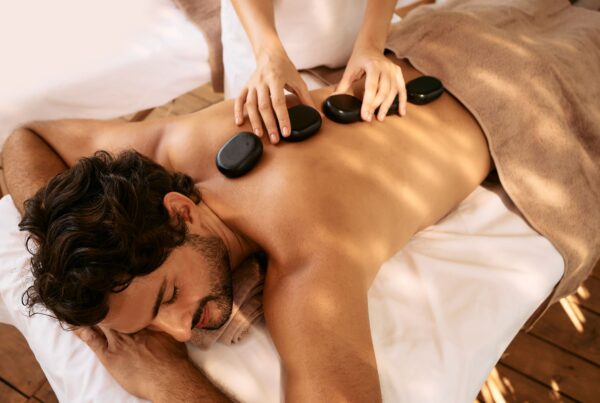
If you notice tension in more than one area, a 60- or 90-minute heated sand massage provides steady warmth beneath your whole body while the therapist works on the tightest spots. That whole-body warmth sets it apart from a hot stone massage, which uses heated stones on specific areas.
Warmth is only one part of the treatment. At Eternel Experiences, founder Maria Baiocco, a registered massage therapist and B.Sc. kinesiologist, adjusts the hands-on work to each person’s needs.
What relaxation practices can support long-term wellness?
Massage therapy, meditation and mindfulness, deep breathing, yoga and gentle stretching, and consistent sleep routines can all support long-term wellness. Which practice suits you best depends on whether you’re dealing with physical tension, a busy mind, or trouble sleeping.
Here’s how the five compare, including how much time each typically takes.
| Practice | How it helps | Typical time commitment |
| Massage therapy | Helps ease muscle tension while steady touch gives you time to relax | 60 or 90 minutes per session |
| Meditation and mindfulness | Helps you bring your attention back to the present instead of getting caught up in your thoughts | 10 to 20 minutes |
| Deep breathing exercises | Uses slow, controlled breathing to help your body settle down | 2 to 5 minutes |
| Yoga and gentle stretching | Helps ease stiffness through gentle movement and controlled breathing | 15 to 45 minutes |
| Consistent sleep and rest routines | Supports recovery through regular sleep and wake times | About 7 to 9 hours of sleep nightly for most adults |
If stress shows up as muscle tension, massage or gentle yoga may be a good place to start. If your mind stays busy long after work, a few minutes of breathing exercises or meditation may help you wind down.
You don’t have to choose just one, either. An occasional massage can sit alongside two or three short daily habits, such as stretching or breathing exercises. On massage days, you can simply rest while the therapist does the hands-on work.
At Eternel Experiences, the 2-hand massage offers focused attention from one therapist, while a 4-hand massage involves two therapists working together for a more coordinated, full-body experience.
How often should you make deep relaxation part of your routine?
Start with 10 to 20 minutes of deep relaxation each day. If you enjoy massages, you might also book one every two to four weeks. How often you book depends on your lifestyle, stress level, and what helps you feel rested.
The harder part is making time for relaxation when one demanding week leads straight into the next. You keep telling yourself you’ll rest after this busy week. How many weeks has it been? Putting that time on your calendar makes it harder to keep pushing rest aside. Here’s what you might put on that calendar, depending on your needs.
| Factor | What it looks like | Rhythm to try |
| Daily physical demands | Desk hours, standing shifts, lifting, or hard training | Daily stretching or body scans, with an optional heated sand massage every two to four weeks |
| Work-related stress | Tight deadlines and after-hours messages | Short breathing breaks each day, with occasional massages if you find them helpful |
| Sleep quality | Trouble falling or staying asleep | A nightly wind-down routine with calming breathing or progressive muscle relaxation |
| Personal wellness goals | General upkeep, unwinding after a demanding period, or improving focus | 10 to 20 minutes of guided relaxation most days, with an optional monthly massage |
How can deep relaxation become part of a sustainable long-term wellness routine?
Once you’ve made time for relaxation, the next step is choosing practices you can keep up with. Those practices should fit around physical activity, sleep, and the other demands on your day.
These five steps can help you build that habit without adding more pressure to your day.
- Notice what leaves you feeling tense, whether that’s evening emails or long commutes. That helps you figure out when you need a break most.
- Choose one or two practices from the methods discussed earlier. If evenings are when your stress builds up, a short breathing exercise after work might be easier to manage than a longer session.
- Keep the habit realistic. On busy days, five minutes of breathing beats an hour of yoga you keep skipping.
- Make room for movement and sleep, too. You could add a few minutes of breathing after an evening walk or before bed, so relaxation fits into habits you already have.
- Check your routine every month or so. If you’re still sleeping poorly, feeling tense, or running low on energy, consider changing the practice, duration, or timing to find what works better.
If massage appointments are part of your routine, Eternel Experiences offers packages of 6, 10, or 12 hours of personalized massage, with indoor parking included. You can also share the hours with family or friends.
Explore personalized relaxation experiences for your long-term wellness goals
Recognizing when your body needs a break is one thing. Making time to relax, even when your schedule is full, is another.
For business owners and professionals with packed schedules, Eternel Experiences offers personalized relaxation sessions in Montreal. You put a lot into your work, and a session gives you time to focus on your own recovery.
A 60-minute 2-hand massage starts at $130, while a 90-minute 4-hand massage starts at $500. Both include a same-day insurance receipt issued in your name.
Still Thinking About Work After Hours? Make Your Next Hour About You!
Frequently Asked Questions (FAQs)
Q1. Is deep relaxation the same as sleep or simply resting?
Not exactly. Deep relaxation, or relaxation profonde in French, usually means intentionally calming your body and mind while you’re awake. Sleep gives your body time to rest, while practices like slow breathing or massage can help you ease some of the tension you notice during the day.
Q2. Why can’t I relax even when I’m trying to rest?
Even when you stop working, your mind may still be running through everything you need to do. Trying to force yourself to relax can make it harder. Instead, warmth, slow breathing, and steady touch may help you settle down. At Eternel Experiences, a heated sand table provides that warmth during the massage.
Q3. How can I tell if deep relaxation is working?
You may notice that your shoulders feel less tight or that it’s easier to unwind after a session. Over time, you might also sleep better or feel less drained during busy days. These changes can be subtle, so pay attention to how you feel over time rather than judging one session.
Q4. How long does it take to feel the benefits of deep relaxation?
Slow breathing may help you feel calmer within a few minutes, while a massage may leave your muscles feeling less tense afterward. Changes in sleep or focus may take longer, and the timing varies from person to person.