In this article
- What makes teamwork essential during a four hands massage?
- Which therapist leads during a four-hand massage?
- How do two therapists coordinate their movements throughout the session?
- Which communication techniques keep both therapists in sync?
- How do therapists balance pressure when working on different body areas?
- How do two therapists adapt their techniques to individual client needs?
- Book a personalized four-hand massage at Eternel Experiences
- Frequently Asked Questions (FAQs)
One therapist pressing too hard while the other barely applies pressure?
That’s hardly the relaxing experience you signed up for.
Good teamwork helps prevent that mismatch. During a four hands massage session, one therapist may set the pace while the other follows their lead, with both adjusting pressure as they work.
Even when they’re working on different areas of your body, their movements should feel connected.
Whether their movements feel connected or scattered comes down to four things:
- How the therapists divide their roles
- How they coordinate their movements and techniques
- How they communicate when adjustments are needed
- How they adjust pressure for different body areas
What makes teamwork essential during a four hands massage?
Teamwork turns two therapists into one treatment. Without it, you get two separate massages at once, each with its own rhythm and pressure (and your body notices).
Keeping those rhythms in sync starts with a shared treatment plan. Both therapists agree on your goal and the order of techniques beforehand, so they know what comes next.
That helps them keep the flow steady while working on two areas at once, a level of coordination a traditional massage with one therapist doesn’t require.
The plan also makes each therapist’s role clear. When neither has to guess the other’s next move, both can focus on your comfort. Without that clarity, one therapist might speed up while the other slows the pace.
The pressure can feel uneven too, and your brain starts tracking two sets of hands instead of letting go.
Four hands, two therapists, one massage. But who decides what each therapist does?
Which therapist leads during a four-hand massage?
The more experienced therapist may take the lead, setting the order of techniques, the pace and the starting pressure.
The second therapist follows that lead, whether they’re mirroring a stroke or working on a separate area.
Here’s how those roles can differ in practice.
| Role detail | Lead therapist | Second therapist |
| Main job | Sets the order, pace and starting pressure | Follows the agreed pace and adjusts to the lead |
| Strokes | Starts or signals changes in technique | Mirrors or complements those movements |
| Position | Takes the position set in the plan | Works beside or across from the lead, depending on the area |
| Body areas | Works the areas the plan assigns | Covers other assigned areas or mirrors the opposite side |
For example, the lead therapist might work on your shoulders while the second focuses on your legs.
But how do they keep the massage feeling like one experience?
By staying in step and adjusting their movements to each other as they go.
How do two therapists coordinate their movements throughout the session?
Two therapists can’t just start massaging and hope their movements match.
During a four hands massage at Eternel Experiences, they follow a shared routine that helps them begin together, keep pace, and move between techniques.
Here’s how that coordination plays out:
- The first touch happens together, so the massage begins in sync.
- The warm-up strokes may mirror each other, with long, gliding movements (effleurage) along both sides of your body.
- The rhythm stays steady as they adjust their pace, rather than having one pair of hands rush ahead.
- The deeper work follows as they move into kneading, adjusting pressure to suit the area they’re working on.
- The finish comes with a final light stroke before both therapists lift their hands away together.
Even with a shared routine, the therapists still need ways to signal when it’s time to change pace or move on.
Which communication techniques keep both therapists in sync?
Two therapists stay in sync through nonverbal cues, timing signals, transition cues and shared awareness of how your body responds.
Most of that communication happens quietly, without interrupting your massage.
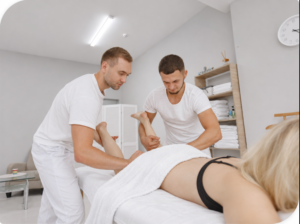
- Nonverbal cues, like a nod or eye contact, let the therapists check that the other is ready without saying a word.
- Timing signals from the lead therapist help them slow down or speed up together.
- Transition cues let them know when to move to the next area, so neither shifts before the other is ready.
- Shared awareness means both therapists pay attention to your reactions, such as a tense shoulder or held breath, and adjust their approach.
Those same cues also help the therapists adjust pressure without interrupting the massage.
How do therapists balance pressure when working on different body areas?
Both therapists start with a pressure level you’re comfortable with, then adjust it for each body area so the massage feels balanced without using the same force everywhere.
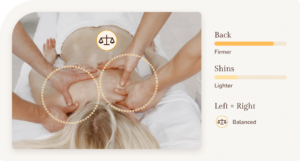
- Pressure assessment happens during the first few strokes, when the lead therapist checks whether the pressure feels too light, too firm or just right.
- Upper and lower body areas don’t always need the same pressure. What feels comfortable on your back may be too much for your shins.
- Left and right sides should feel balanced, even if they don’t receive identical pressure. If one shoulder feels much firmer than the other, it can make it harder to relax.
- Technique adjustments let one therapist slow down over a knot (a tight, sore spot) while the other adjusts their movements so the massage doesn’t feel disjointed.
- Client feedback helps them understand how the pressure actually feels to you. If one area feels too firm or another needs more attention, you can tell them.
But pressure isn’t the only thing they adjust to suit your needs.
How do two therapists adapt their techniques to individual client needs?
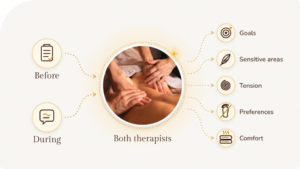
Two therapists adapt their techniques using what you’ve told them and what they notice as they work.
They also share any requests you make, so if you ask one to ease up or avoid an area, the other knows about it too.
- Session goals set the direction, whether you’re here for stress recovery or relief from a stiff lower back.
- Sensitive areas may need lighter work or be skipped altogether. Mayo Clinic advises avoiding pressure over healing wounds or areas with nerve damage.
- Muscle tension may call for slower, more focused work, such as the sustained pressure used in myofascial release. Eternel founder Maria Baiocco, a registered massage therapist, specializes in this technique.
- Treatment preferences aren’t always about pain. Don’t like having your feet massaged? Both therapists can skip them.
- Comfort adjustments can be as simple as getting a blanket if you feel cold. Either therapist can pause to help you get comfortable.
What you share when you book gives both therapists a starting point, but you can still ask for changes during the massage.
Book a personalized four-hand massage at Eternel Experiences
The best sessions come from two therapists who share the work, move in step, and keep pressure consistent.
But matching each other doesn’t guarantee the pressure will feel right to you.
A consultation with Eternel Experiences gives you a chance to share where you hold tension and how much pressure you prefer, so both therapists know where to focus and when to ease up.
Don’t let another massage leave you wishing you’d spoken up about the pressure.

Eternel’s 4-Hand Massage runs 90 minutes and starts at $500. Appointments can fill up quickly each week, so book your Premium 4 Hands Massage today and share those preferences before the first stroke.
Frequently Asked Questions (FAQs)
Q1. Is a four-hand massage the same as a couples massage?
No. A couples massage gives two clients their own therapists in the same room, while a four-hand massage has two therapists working on one client. At Eternel Experiences, both therapists stay focused on you for the whole session.
Q2. What should I do if one therapist presses harder than the other?
Tell either therapist as soon as you notice the difference in pressure. In this Cleveland Clinic article, licensed massage therapist Victoria Bodner also recommends speaking up when the pressure feels too deep or uncomfortable. At Eternel Experiences, the lead therapist can then adjust the pressure to the level you prefer and have the other therapist match it.
Q3. Do both therapists massage the same body areas or work on different areas?
They do both, depending on the stage of the session. During the warm-up, they mirror each other’s movements, but later they work on different areas, such as your back and legs. That gives them time to cover more areas in the same session.
Q4. Can a four-hand massage feel overwhelming or distracting?
Yes. The first few minutes can feel intense when two therapists are working on you at once. With four hands moving across different areas, you may not know where the next touch is coming from, which is part of why the massage feels different. A steady rhythm between the therapists can make that unfamiliar sensation easier to settle into. If it still feels like too much, ask them to slow down or lighten their touch.